18 Aug 2026 · Desa Ban, Karangasem, Bali
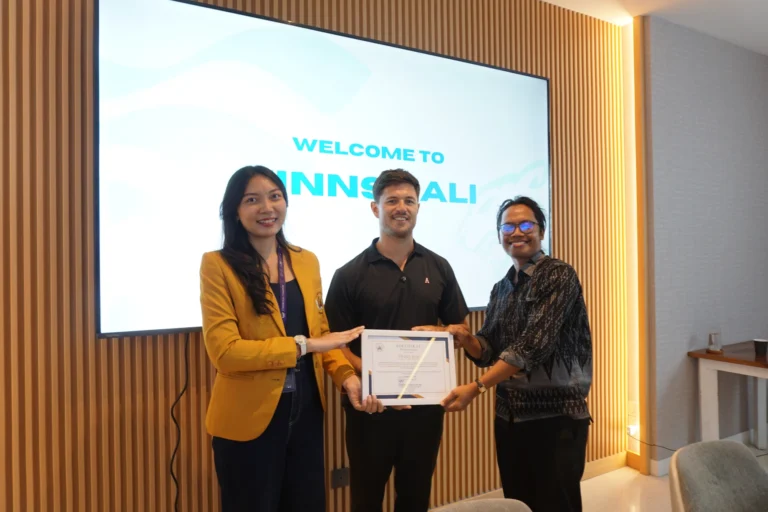
In the steep volcanic slopes of Mount Abang, 436 families across three Manikaji villages are experiencing a remarkable transformation. Through the WELFAR program by FINNS Bali in partnership with East Bali Poverty Project (EBPP), we are discovering sustainable ways to farm, strengthen food security, and build better livelihoods.
For four generations, families living on these harsh slopes depended only on cassava and legumes. Access to nutritious food was limited, leading to malnutrition, especially among children. The knowledge and infrastructure for sustainable farming simply did not exist. This reality inspired EBPP to launch a comprehensive program in collaboration with Yayasan Bumi Langit.
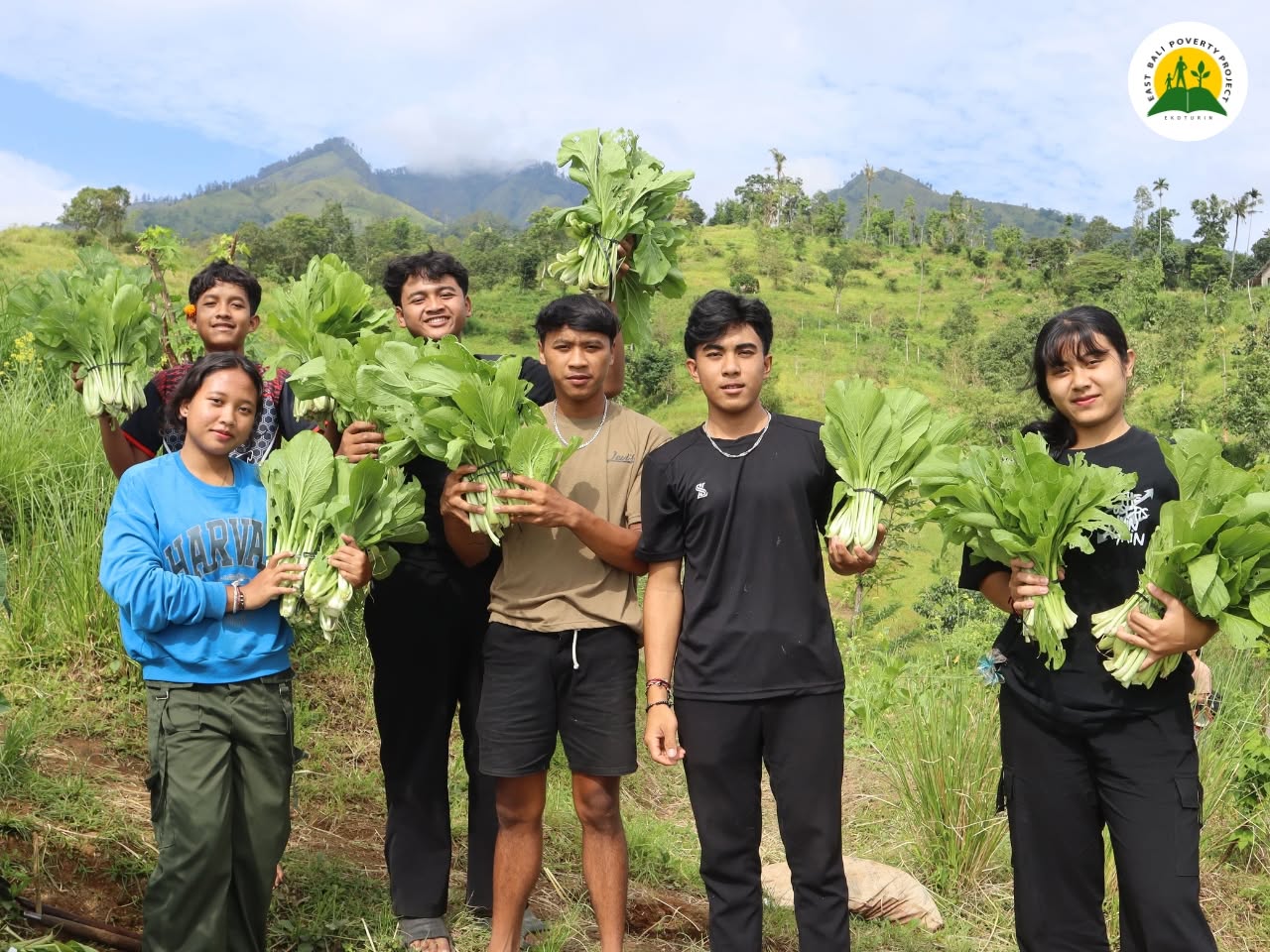
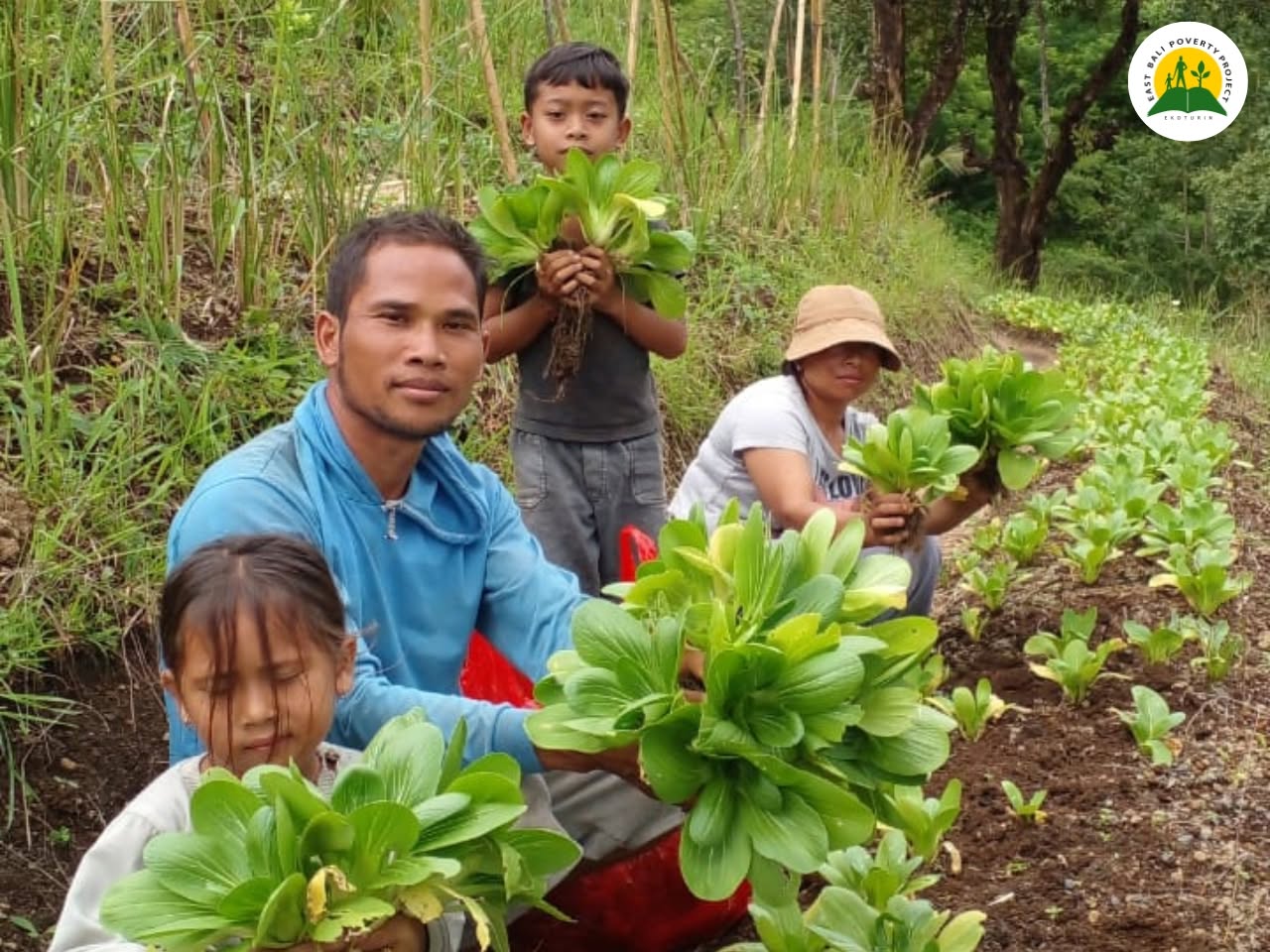
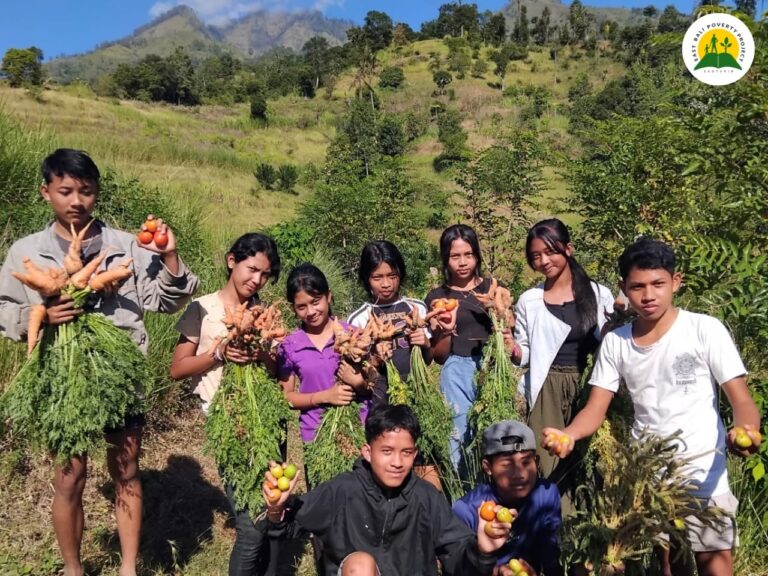
Through central learning gardens in each village, farmer groups learned hands-on techniques: building contoured terraces, creating rainwater harvesting channels, producing organic compost from local materials, and cultivating diverse crops without chemical fertilizers. The results were extraordinary. Within months, 99 farmers harvested their first vegetables: 35 kg of pakcoy and 18 kg of green mustard. Encouraged by this success, EBPP distributed 2,700 fruit tree seedlings of avocado, lime, papaya, banana, and others to all farmer group members.
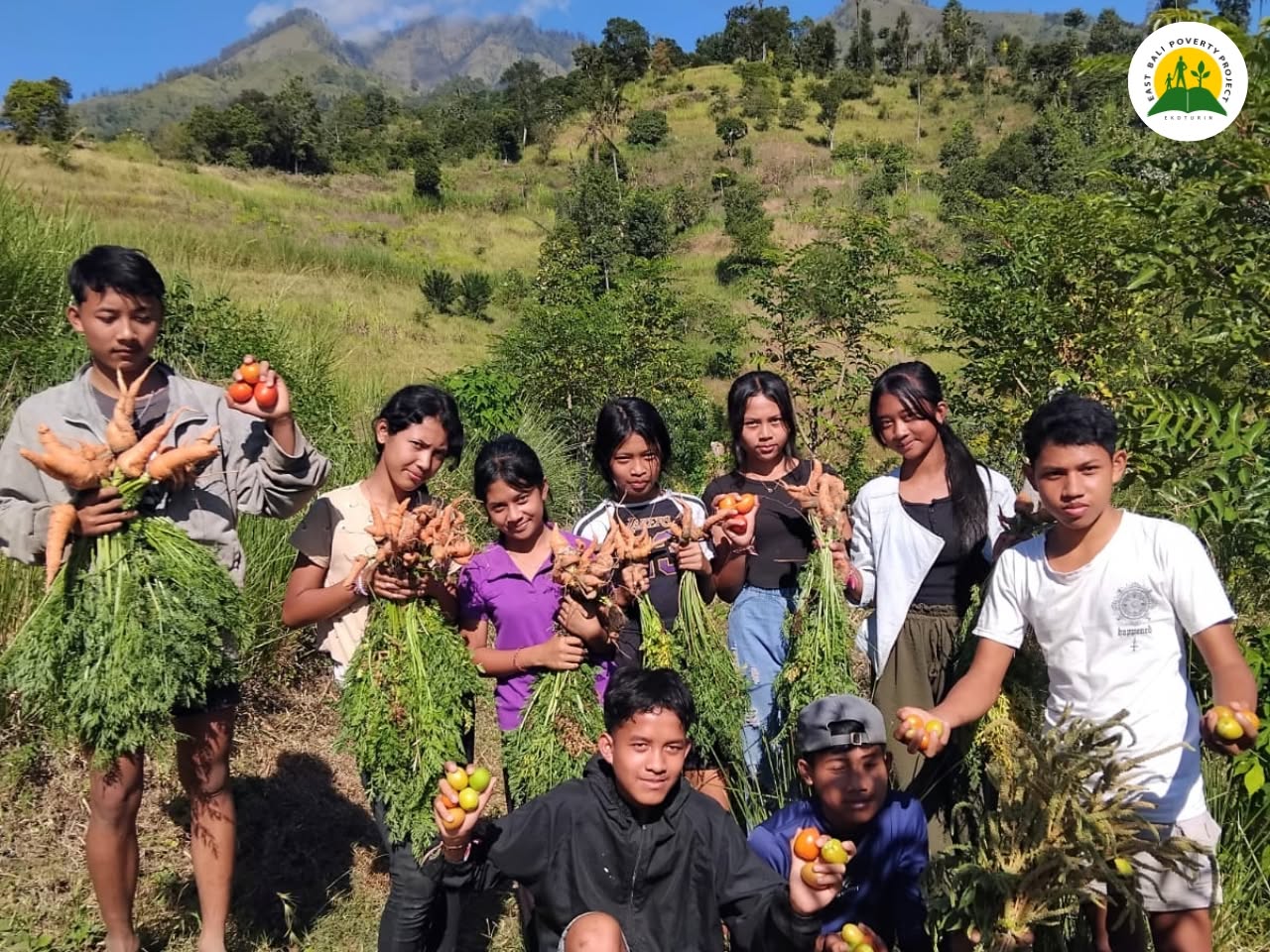
By nine months into the program, 30 farmer group members were implementing these practices on their own land, harvesting tomatoes, eggplants, chilies, and various vegetables and fruits. More importantly, some families produced surplus crops, allowing them to sell fresh produce and generate additional household income. One farmer, Pak Sudana from Manikaji Puncak, shares: “The knowledge we have gained has completely changed the way we farm. Even during the dry season, I harvested tomatoes, eggplants, and fruits using organic compost. The produce is healthier and fresher, and I was able to sell the surplus.“
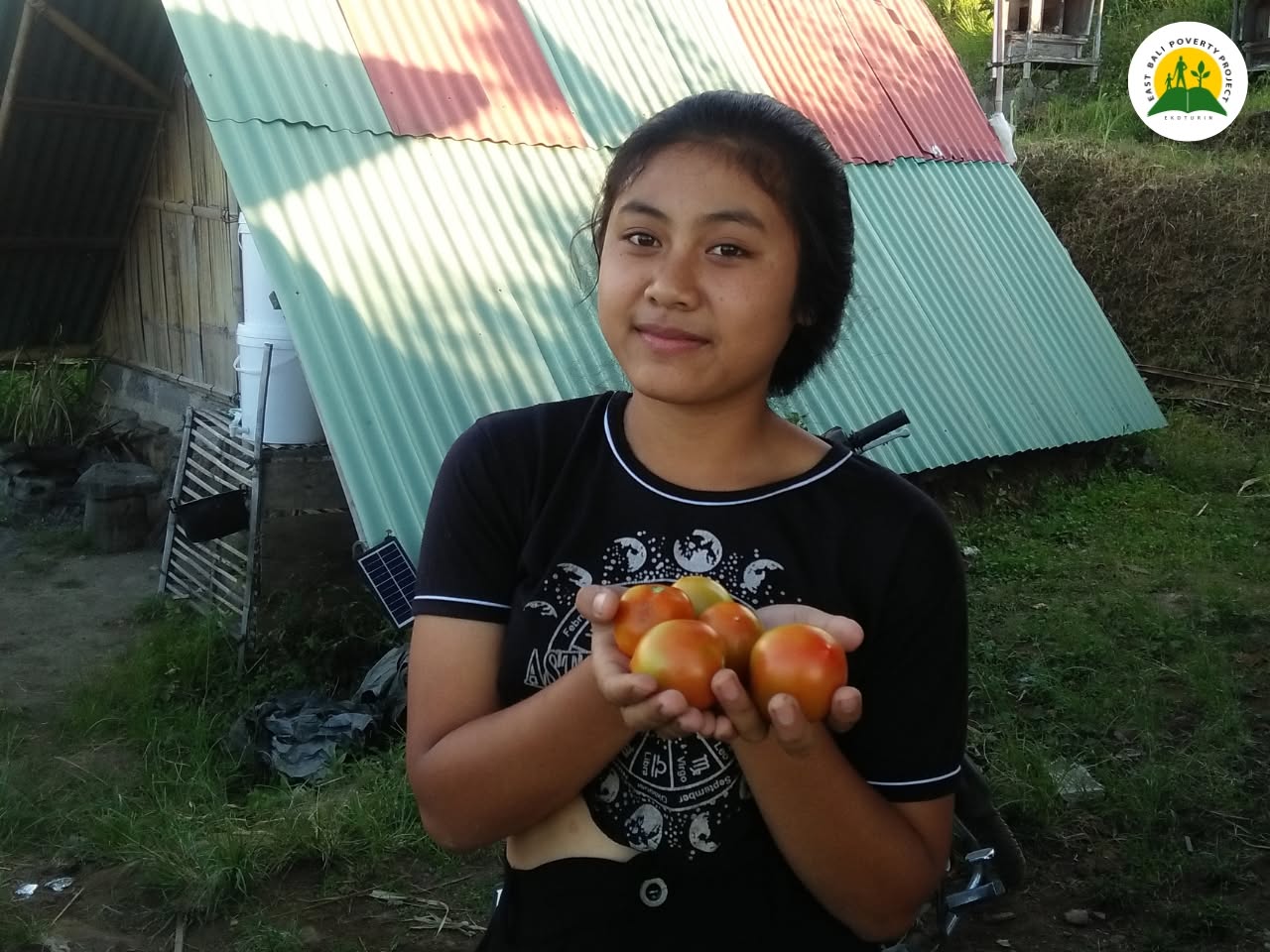
One of the most powerful aspects of the program is the involvement of young people. Students from Manikaji School have become active agents of change, sharing knowledge with local farmers. Wilasmi, an 11th-grade student, explains: “I am very happy to learn about organic farming. Through this program, we farm our dry land using natural materials without pesticides. For me, organic farming is about protecting nature and preserving it for the future.” After learning in the school garden, she applied this knowledge on her family’s land and now works alongside farmer groups.
As the program expanded, EBPP introduced integrated farming systems. Farmers built chicken coops to raise sturdy chicken breeds, creating multiple benefits: fresh eggs and meat for protein, chicken manure for soil enrichment, and surplus for income generation. At the center of this transformation stands the Manikaji Learning Garden, a living classroom and resource center where farmers and students practice together, building confidence and skills to apply knowledge on their own land.
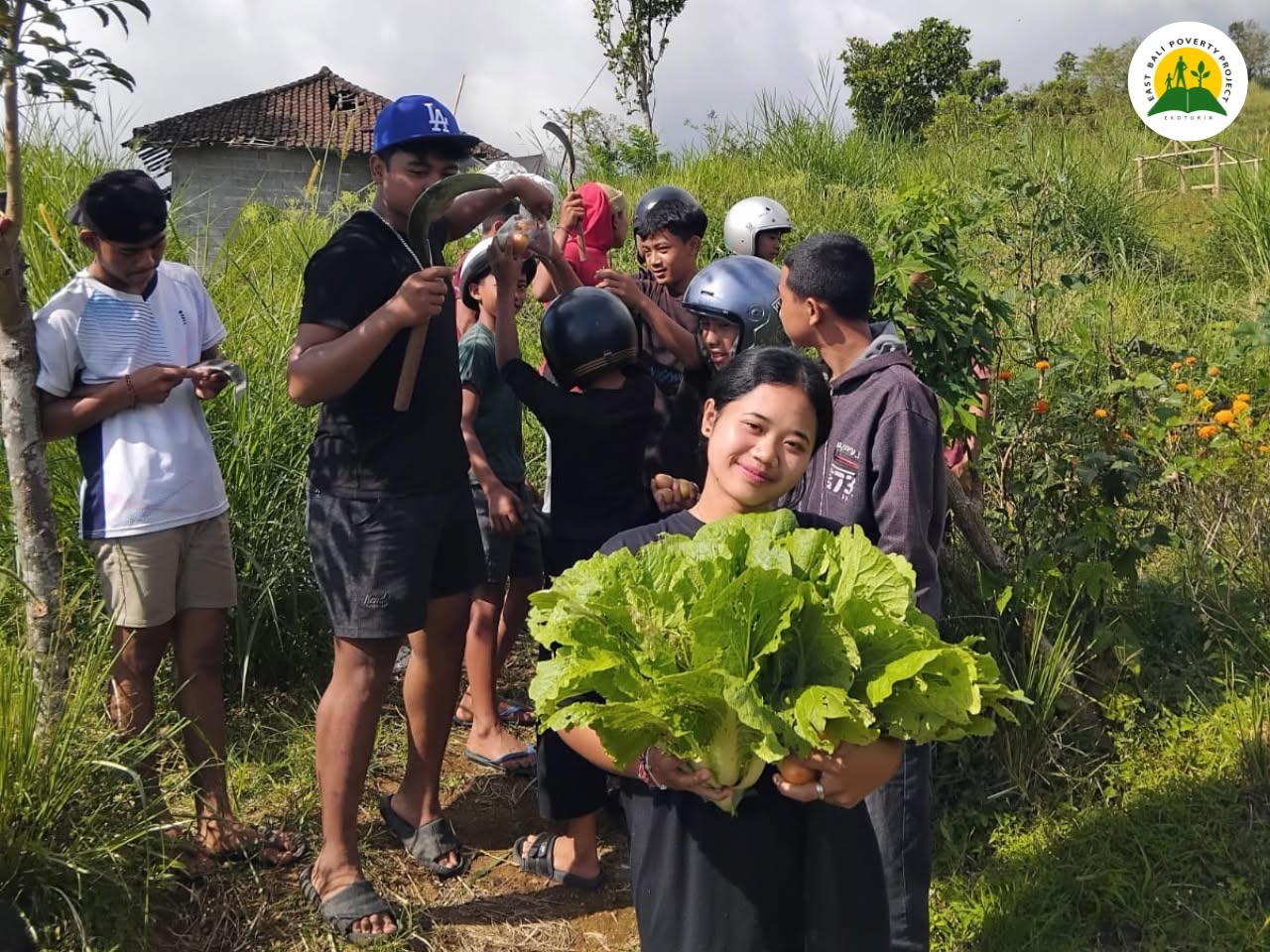
The program’s impact speaks clearly: 436 families now benefit across 415 hectares of improved dryland; 99 farmer group members actively participate; 2,700 fruit tree seedlings distributed; 30+ farmers successfully implementing practices within nine months; and multiple harvests generating household income. The transformations happening in Manikaji Puncak, Asti and Kaliaga are powered by FINNS Bali in community-based regenerative agriculture.
In the steep gardens of East Bali, hope is growing one season at a time. With each harvest, each bundle of vegetables, and each chicken coop completed, a more resilient, food-secure, and sustainable future is being built. The story of Manikaji proves that when communities are given knowledge, support, and trust, they can transform their own futures.